
Loading...
Serving Honolulu, HI and surrounding areas. (808) 509-0068
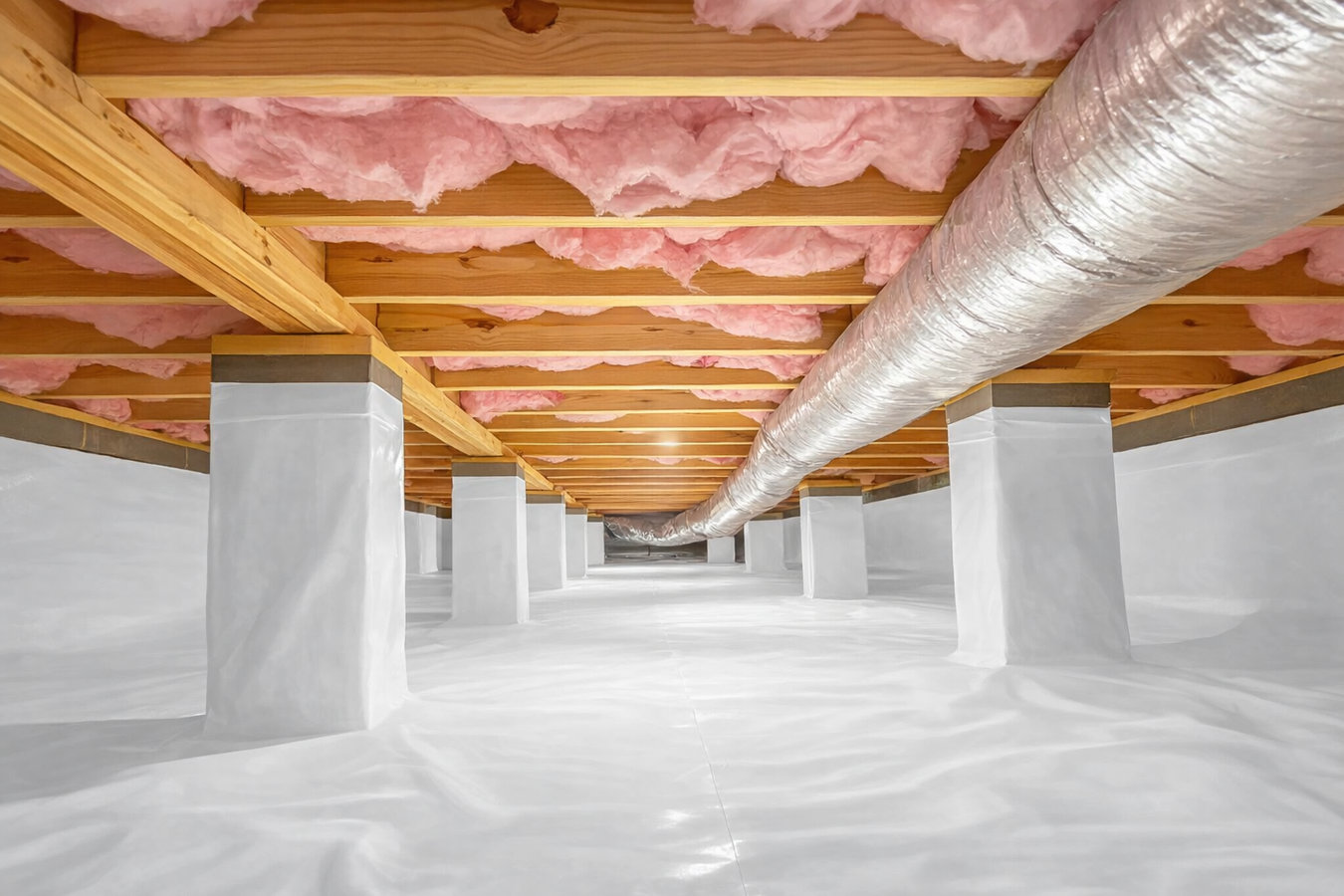
Moisture and heat rising through your floor make your home uncomfortable and drive up your electricity bill. We seal and insulate crawl spaces so the conditions under your home stop working against you.
Crawl space insulation in Honolulu means installing material between your floor joists or along the crawl space walls to slow the movement of heat and moisture from below into your living areas. Most jobs are completed in one to two days, and you do not need to leave home during the work - the crew operates entirely in the space beneath your floor.
In Honolulu's climate, an uninsulated crawl space lets ground moisture rise through your floor and outside heat push up from below, making every room above it warmer and damper than it should be. This problem is especially common in older homes across neighborhoods like Kaimuki and Manoa that were built without a moisture barrier in place. Combining crawl space insulation with a crawl space vapor barrier addresses both the heat and moisture sides of the problem at once.
If you have also been dealing with wall insulation concerns or suspect air is leaking through the structure, pairing this work with wall insulation gives you a more complete thermal envelope. Most Honolulu homeowners notice a real difference in how their ground floor feels within the first few weeks after the job is done.
In Honolulu, if your floors feel noticeably warm or slightly damp to the touch during the day - especially on the ground floor - that is often a sign that heat and moisture from the crawl space are pushing upward. This is a common complaint in older Kaimuki and Manoa homes where the crawl space has never been sealed. If your AC is working hard but the floors still feel uncomfortable, the crawl space is a likely culprit.
A persistent musty smell - especially in rooms near the floor or in ground-level closets - often means mold or mildew is growing somewhere below you. In Honolulu's humidity, an uninsulated crawl space can develop mold growth relatively quickly, and that smell travels upward through gaps in the floor. If you notice it more after rain or on humid days, the crawl space is worth inspecting.
If you open the crawl space hatch and see bare dirt with no plastic sheeting, that ground is releasing moisture into the space every day. Standing water after rain is an even more urgent sign. In Honolulu, where rain events can be intense and localized - especially in valley neighborhoods like Manoa - water intrusion into the crawl space is not unusual and should be addressed before it damages the wood structure above.
If a pest inspector has pointed out termite damage, soft spots in your flooring, or discolored wood near the base of your home, the crawl space environment is likely contributing. Damp, warm crawl spaces are ideal conditions for the subterranean termites that are extremely active throughout Oahu. Insulating and sealing the space removes the conditions that attract them.
We start with an in-person inspection before quoting anything. The technician checks the current condition of the space - moisture levels, existing insulation, signs of mold or pest activity, and how the space is currently vented. That inspection is what makes the quote accurate and lets us explain exactly what you are paying for. Depending on what we find, the job may involve removing damaged old material first, installing a ground-level moisture barrier, and then applying the new insulation between the floor joists or along the crawl space walls.
Our approach in Honolulu's climate leans toward sealing the crawl space rather than relying on vents, because outside air here carries enough moisture that venting can make conditions worse rather than better. We also discuss insulation material choices - in some cases, crawl space vapor barrier installation alongside the insulation is the most effective approach for long-term moisture control. When the job is finished, we walk you through the completed work - either in person or via photos - so you can see exactly what was done.
Ideal for homes where insulation is installed between floor joists to reduce heat gain and improve floor comfort in ground-level rooms.
Best suited for older Honolulu homes with persistent moisture issues - combines a heavy plastic liner with insulation to fully seal the space.
For homeowners who need ground moisture blocked first before insulation goes in - especially relevant in valley neighborhoods with high rainfall.
For spaces where existing insulation has been damaged by moisture, pests, or age and must be cleared out before new work begins.
Honolulu's average relative humidity hovers between 60 and 70 percent year-round, and temperatures rarely drop below 65 degrees even at night. That means the crawl space insulation conversation here is almost entirely about controlling moisture and keeping conditioned air from escaping - not about keeping heat in during winter. Many homes built in the 1940s through 1960s never had their crawl spaces properly sealed, and decades of ground moisture can quietly soften the wood framing that holds up your floor. Homeowners in Kaneohe, HI and Kailua, HI on the windward side of the island face similar conditions given the higher rainfall those areas receive.
Oahu also has some of the highest termite activity rates in the country, and a damp, uninsulated crawl space is exactly what subterranean termites are looking for. Properly sealing and insulating the space removes the conditions that draw them in. Hawaii's electricity costs are among the highest in the country, so reducing heat gain through an uninsulated floor system delivers real savings - not a rounding error. The University of Hawaii has documented the termite risk in detail for Oahu homeowners, and it is a factor worth taking seriously when deciding whether to address your crawl space. You can read more at UH CTAHR Termite Research.
We ask a few basic questions - home size, whether you have noticed moisture or smell issues, and whether anyone has looked at the crawl space recently. You hear back within one business day to schedule a site visit. No quote is given by phone because accurate pricing requires seeing the actual space.
A technician accesses your crawl space, checks for moisture, mold, pest damage, and existing insulation, and assesses venting and access. You receive a written estimate covering exactly what work will be done, what materials will be used, and whether a permit is required by the City and County of Honolulu.
Clear the path to the crawl space entry point and keep pets and children away from the area. The crew works entirely below your floor - your daily routine is largely unaffected. If old material needs to come out first, that happens before new insulation goes in.
Before leaving, the contractor walks you through the completed work - either in person or via photos - explaining what was installed, how to spot future issues, and whether any follow-up is recommended. All paperwork, including permit documentation if applicable, is provided.
Free on-site estimate. No pressure. Experienced contractor serving Honolulu and all of Oahu.
(808) 509-0068You get a written estimate before we start and a walkthrough of the finished crawl space before we leave, so the scope is on record and easy to check. Crawl space jobs that are done wrong are expensive to fix, which is why we document every step.
We understand the difference between insulating a home in a dry mainland climate and doing the same work in Honolulu's heat and humidity. Our recommendations account for the moisture barrier, the encapsulation approach, and the termite risk specific to Oahu - not generic advice copied from a mainland playbook.
Depending on the scope, your project may require a permit from the City and County of Honolulu's Department of Planning and Permitting. We tell you upfront whether a permit applies and handle the application on your behalf, so you are protected if you ever sell the home.
You receive photos of the finished crawl space and copies of all permit paperwork before the crew leaves. That record matters - for your own peace of mind, for warranty claims, and for buyers if you sell the home down the road.
Crawl space work in Honolulu is not a one-size-fits-all job - the right approach depends on your home's age, construction type, and the specific conditions below your floor. We assess all of that before recommending anything, so you are paying for a solution that actually fits your home.
Extend your home's thermal protection to the walls after sealing the crawl space for a more complete energy upgrade.
Learn MoreA heavy plastic liner that blocks ground moisture at the source - often installed together with crawl space insulation for best results.
Learn MoreHonolulu's humidity does not pause - every season that space sits uninsulated, moisture is working against your home. Call us now or request a free estimate to get started.