Loading...
Serving Honolulu, HI and surrounding areas. (808) 509-0068
Honolulu heat presses through uninsulated walls and attics every day. Open-cell foam fills every gap and crack to stop heat gain at the source, so your AC runs less and your home stays comfortable.
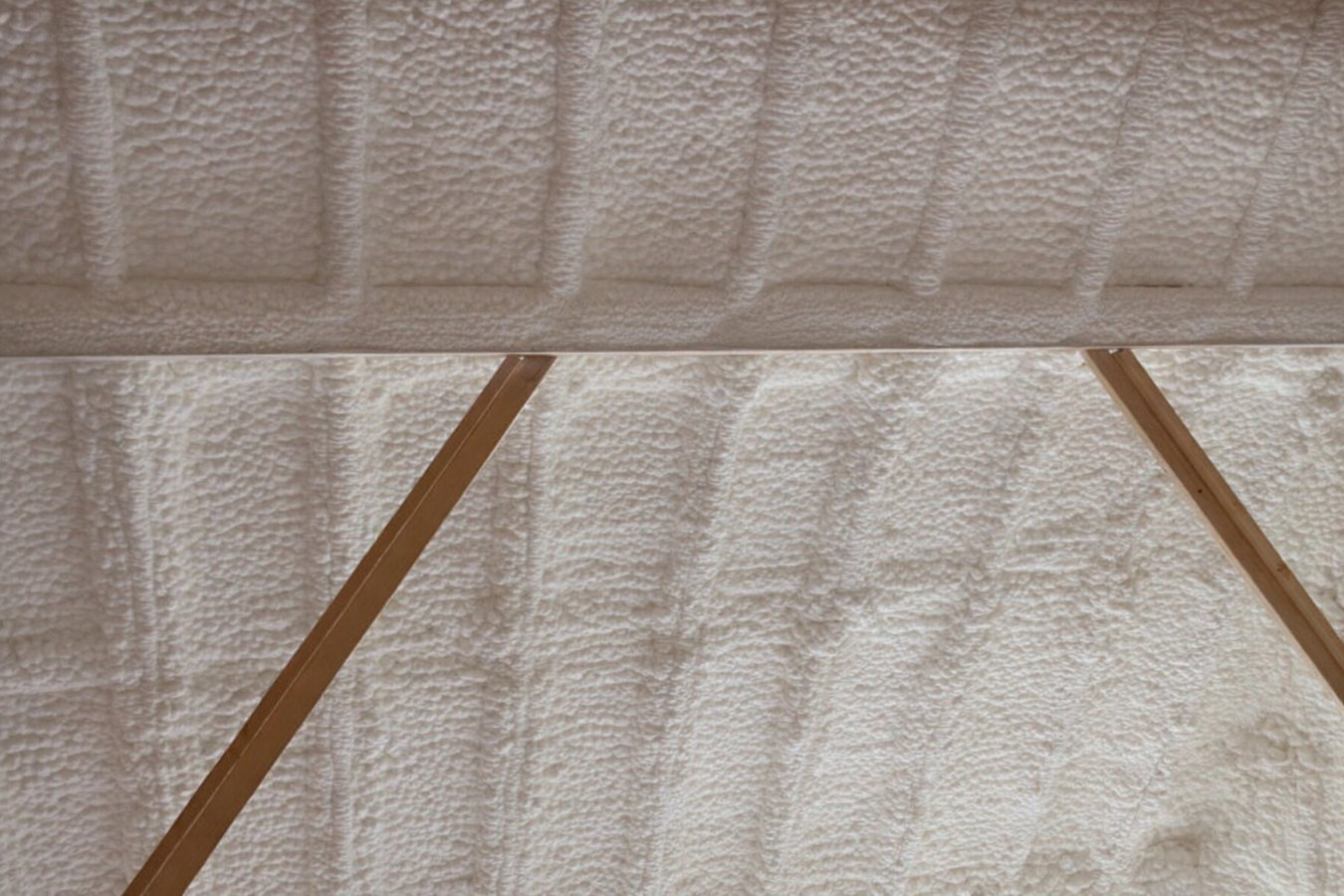
Open-cell foam insulation in Honolulu is a spray-applied material that expands on contact to fill walls, attics, and roof spaces completely - most residential jobs are finished in one to two days and the foam stays in place for the life of the building without settling or sagging.
A trained crew sprays the liquid foam directly into the cavity or surface being treated. Within seconds it expands to fill every irregular corner, gap around pipes, and crack along framing joints - the kind of coverage that batts and blown-in materials cannot match. In Honolulu, where heat and humidity press through building surfaces every day of the year, that complete coverage matters. Open-cell foam in your attic or walls creates a thermal barrier that slows how fast the sun heats your living space. Many homeowners pair it with spray foam insulation projects that cover multiple areas of the home at the same time.
Unlike denser closed-cell foam, open-cell foam is soft and breathable. Water vapor can pass through it rather than getting trapped behind it - which is an advantage in Honolulu where humidity is a constant. It also absorbs sound, so homeowners often notice quieter rooms as a side benefit after installation.
If your air conditioner runs most of the day but the house never truly cools down, heat is entering faster than your system can remove it. In Honolulu, the most common cause is an uninsulated or under-insulated attic - the roof soaks up heat all day and radiates it down into your living space. Open-cell foam applied to the attic floor or roof deck intercepts that heat before it reaches your rooms.
If a particular bedroom or the upper floor of your home runs noticeably warmer than the rest, uninsulated surfaces nearby are letting heat in. In older Honolulu single-wall construction homes - where the wall is just one layer of boards - this is especially common because there is no insulated cavity at all. Spray foam can create a thermal barrier inside those walls for the first time.
Hawaiian Electric customers in Honolulu pay some of the highest electricity rates in the country. If your bill has been rising even though your habits have not changed, your home may be working harder to stay cool because insulation has degraded or was never adequate. A quick assessment can identify where conditioned air is escaping.
Open-cell foam is particularly good at sealing the small penetrations that let outdoor air sneak inside. If you can see light through gaps around pipes, feel faint drafts near electrical outlets on exterior walls, or notice that air moves through where the wall meets the ceiling, those are the same pathways that let hot, humid outdoor air into your home every hour of the day.
We install open-cell foam insulation in attics, walls, crawl spaces, and roof assemblies across Honolulu. Every project starts with a walkthrough to measure the area, confirm access, and check for any moisture issues that need to be resolved before foam is applied. We work on all housing types common in Honolulu - from concrete block bungalows and single-wall plantation homes to newer frame construction - and we adjust our approach based on what the structure needs. For homeowners who want maximum performance, we can pair open-cell foam with our commercial insulation capabilities for mixed-use or larger residential properties.
When deciding between open-cell and denser closed-cell foam, location matters. Open-cell foam excels in attic floors, interior wall cavities, and roof deck applications where breathability is an asset. For areas that need a vapor barrier or structural reinforcement - like rim joists or below-grade surfaces - we may recommend spray foam insulation or a combination approach. We explain the reasoning before any work begins so you understand exactly what is being installed and why. Learn more about the differences from the U.S. Department of Energy insulation guide.
Ideal for Honolulu homes where the roof is the primary source of heat gain - foam applied here cuts the biggest source of heat before it reaches living spaces.
Right for older single-wall construction or any home that lacks an insulated wall assembly - foam fills the cavity and creates a thermal barrier for the first time.
For homes with accessible crawl spaces where open-cell foam can insulate the floor assembly and reduce moisture-driven air movement from below.
For homeowners who want to address both heat transfer and air infiltration at the same time - the two upgrades together produce better results than either one alone.
Honolulu averages around 85 degrees Fahrenheit in summer and rarely dips below 65 degrees even in the coolest months, with relative humidity often sitting above 70 percent. That means insulation here is not fighting cold - it is fighting constant heat gain and moisture intrusion. Open-cell foam is particularly well-matched to this climate because it fills every gap in a wall or roof assembly rather than leaving the small voids that batts and blown-in materials typically leave behind. A large share of Honolulu homes were built in the 1950s through 1970s with minimal or no insulation, and many have never had an upgrade. Homeowners in Pearl City and Kailua deal with the same sun exposure and humidity challenges that drive heat gain throughout Oahu, and many of those homes are strong candidates for a first-time foam insulation upgrade.
Hawaii homeowners also benefit from the fact that open-cell foam does not settle or sag over time. Older fiberglass batts found in pre-1980s homes are often compressed, moisture-damaged, or simply inadequate - and replacing them with foam provides a permanent improvement. Honolulu homeowners may be eligible for federal tax credits on qualifying insulation and air sealing upgrades, and Spray Polyurethane Foam Alliance resources provide guidance on product selection and installation standards that apply in Hawaii's hot-humid climate zone.
Reach out by phone or through our contact form. We will ask a few basic questions about your home type, age, and what problem you are trying to solve. We reply within one business day and can typically schedule an in-person assessment within a few days.
We walk through your home, measure the areas to be insulated, and check for moisture issues that need to be addressed first. Within a day or two you receive a written quote that breaks down cost by area, foam thickness, and what is included - no vague estimates.
Clear stored items from the work area and arrange to be out of the home - along with any pets - for at least 24 hours after spraying is complete. Your contractor will give you a specific checklist so there are no surprises on installation day.
The crew arrives, sets up protective coverings over nearby surfaces, and sprays the foam. Thickness is checked as work progresses. After curing, we walk through the finished work with you so you can see the coverage before we leave.
Free estimate, no obligation. We reply within one business day and bring written quotes - no vague ranges.
(808) 509-0068You get a written estimate before we start and a walkthrough of the finished job before we leave. Every project is on record, and we are glad to share local references so you know exactly who is doing the work on your home.
A large share of Honolulu's housing stock is single-wall construction - a building type that is uncommon on the mainland and requires a different approach than standard frame homes. We have applied foam to these homes across Honolulu and know how to work around the specific challenges they present.
Every quote specifies the coverage area, foam thickness, and total cost before any work begins. You know exactly what you are paying for and can compare it directly against other written quotes. Nothing changes between the estimate and the invoice without your approval.
After installation, we check foam depth in the completed area and walk you through what was done. You can see the coverage yourself and confirm it meets the spec in your quote - you are not just taking our word for it.
Every open-cell foam project we complete in Honolulu is backed by the same written documentation and walkthrough process. We have worked on everything from 1950s concrete block bungalows to newer frame construction, and we bring that local experience to every job.
Insulation installation for Honolulu commercial buildings, from small retail spaces to larger facilities - reducing cooling costs and improving occupant comfort.
Learn MoreComprehensive spray foam insulation covering closed-cell and open-cell options for Honolulu homes that need a permanent, gap-free thermal barrier.
Learn MoreHonolulu's heat does not take a day off - the sooner your home is insulated, the sooner your AC bill reflects it. Call us or request a free estimate today.