
Loading...
Serving Honolulu, HI and surrounding areas. (808) 509-0068
Honolulu's year-round humidity pushes moisture into crawl spaces, slabs, and walls every day. A properly installed vapor barrier cuts that off at the source and protects your home's structure from the inside out.
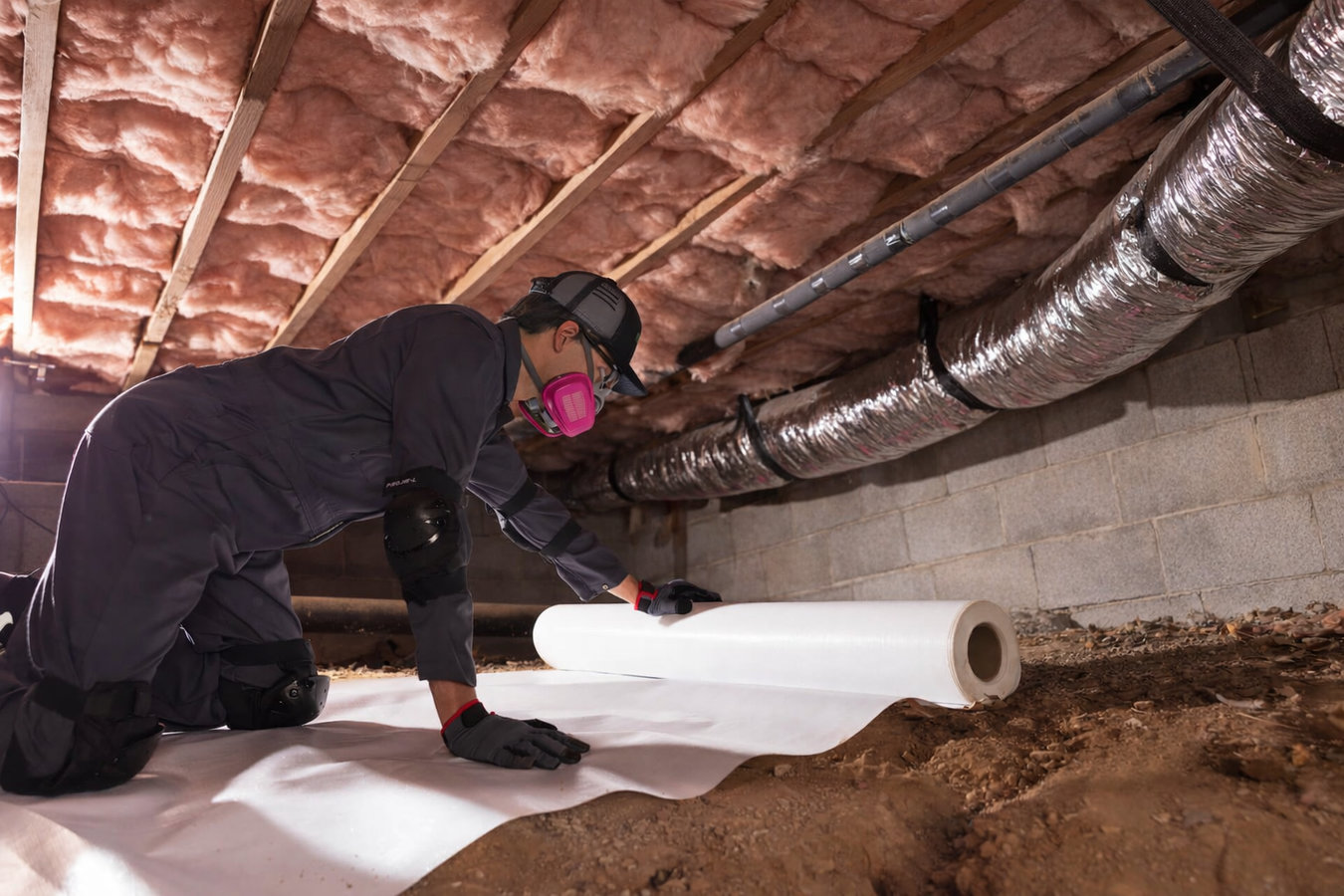
Vapor barrier installation in Honolulu covers laying heavy-duty plastic sheeting in crawl spaces, under concrete slabs, or inside exterior walls to block moisture from entering your home's structure, most crawl space jobs take one full day and the work happens entirely in spaces you do not use day to day.
In Honolulu, the concern is almost entirely about ground moisture and humid outdoor air finding their way into the structural elements of your home - floor joists, subfloor wood, wall framing, and insulation. Without a barrier, that moisture works silently for years, softening wood, encouraging mold, and creating conditions that termites actively seek out. Many homeowners discover the problem only when floors start to feel springy or a musty smell appears that air fresheners cannot quite eliminate. For crawl spaces specifically, pairing a vapor barrier with our crawl space vapor barrier service ensures full-surface ground coverage with proper seam sealing and edge attachment.
The installation itself is not disruptive. You stay in your home, the crew works in the spaces below or behind your finished areas, and the barrier starts working immediately once it is in place - there is no curing or drying period needed.
A musty odor that lingers in bedrooms, closets, or rooms near the floor is one of the earliest signs that ground moisture is moving up through an unsealed crawl space. In Honolulu's humidity, this smell does not go away on its own - it is easy to dismiss as a quirk of older homes, but it almost always means the problem is already underway and getting slowly worse.
Walk slowly across your floors and pay attention to any spots that feel softer than they should, or that flex slightly under your weight. This is a sign that the wood framing beneath your floors has been absorbing moisture and beginning to weaken. In homes built on post-and-pier foundations - common throughout Honolulu - this is one of the clearest signals that the crawl space needs attention now, not later.
Mold that appears at floor level or along the bottom of walls is often driven by moisture rising from below, not from a roof leak or plumbing issue. Honolulu's warm, humid air gives mold exactly the conditions it needs to grow, and once it starts it spreads quickly. If you are cleaning the same patches of mold off the same spots repeatedly, a vapor barrier may be the fix - not a cleaning product.
If your home was built before the 1990s and you have no record of a vapor barrier being installed, there is a reasonable chance one was never put in. Many older Honolulu homes were built to standards that did not require them, and the cumulative effect of decades of ground moisture on floor joists and subfloor wood can be significant. A quick inspection can tell you exactly what is happening beneath your floors.
We install vapor barriers in crawl spaces, under slabs, and inside exterior wall assemblies for homeowners throughout Honolulu. The crawl space is by far the most common application - the crew lays heavy-duty polyethylene sheeting across the entire ground surface, overlaps and tapes the seams, and secures the edges to the foundation walls so nothing shifts during future service visits. For homes where moisture is also entering through walls during a renovation, we can install vapor retarder materials inside the wall assembly before finishes go back up. Every job starts with an on-site assessment to confirm where moisture is entering and what the right solution looks like for your specific home. If you want to address both moisture and thermal performance together, we can combine vapor barrier installation with attic air sealing to give your home comprehensive protection against both moisture and air infiltration from multiple directions.
The quality of the installation matters as much as the material itself. Thin sheeting that tears easily, seams that are not properly lapped and taped, or edges that are not fastened to the wall - any of these let moisture back in exactly where you least expect it. We specify the material thickness and installation method in every written estimate so you can compare quotes on equal terms. The ENERGY STAR guidance on sealing and insulating supports a comprehensive approach to moisture and air management as the most effective way to protect a home's structure and reduce conditioning costs.
Full ground-surface coverage for homes with open crawl spaces - the most common application and the most impactful single step for controlling ground moisture under a Honolulu home.
For homes on concrete slab foundations where moisture is migrating upward through the concrete, a sub-slab barrier applied during renovation or new construction stops that movement at its source.
For renovation projects where wall cavities are open, we can install vapor retarder materials that reduce moisture movement through exterior walls before finishes are closed up.
Every job starts with a free on-site inspection - we identify where moisture is entering, what condition the existing structure is in, and what installation will actually solve the problem rather than just covering it.
Honolulu's average relative humidity hovers between 60% and 70% year-round, with no real dry season to give homes a break from moisture pressure. A large share of the city's housing stock was built between the 1940s and 1970s using post-and-pier style foundations that leave the underside of the home open to outside air - construction that was practical for the climate at the time but was never designed with ground moisture sealing in mind. Homes on the windward side of Oahu receive significantly more rainfall and moisture than those on the leeward side, and homeowners in areas like Kaneohe often find that the urgency and scope of vapor barrier work is greater than for homes on the drier side of the island.
A written estimate matters to you as a homeowner because it puts the full scope on record before work begins, so you know exactly what material is going in and what area it covers. Homeowners in Aiea and other communities across Oahu should always ask for local references and a written estimate before signing anything. A contractor who has done this work nearby will provide both without hesitation. Reviews from other Honolulu homeowners make the check straightforward.
Tell us the age of your home, your foundation type if you know it, and what has prompted your concern - a smell, soft floors, a flagged inspection. We respond within 1 business day and schedule a free on-site visit, not a phone quote. Most estimates are not useful until someone has seen the space in person.
We access the crawl space or review the area being treated, check how much moisture is present, assess any existing damage, and determine how the barrier should be installed for your specific layout. This is also your chance to ask questions and understand what is actually going on under your home.
The crew lays the barrier material across the ground, overlaps the seams, seals them with tape, and fastens the edges to the walls or piers. For most Honolulu homes this takes one full day. You may hear some noise from the crawl space but there is no mess or fumes in your living areas - the work stays entirely below the floor.
Before leaving, we walk you through what was done and provide photos if the space is too tight for you to enter comfortably. There is no drying period - the barrier works immediately. Ask for written documentation of the material used, including thickness, which is useful for future service visits and when selling the home.
No obligation, no pressure. We come out, take a look, and give you a straight written quote within 1 business day.
(808) 509-0068You get a written estimate before anyone starts work and a walkthrough of the finished crawl space before we leave. The estimate spells out the material, the area covered, and any prep work, so the full scope is on record - one of the simplest protections available to you before signing anything.
The barrier we install is rated for long-term performance in continuously humid conditions - not the thin sheeting that tears the first time a pest control technician has to access the crawl space. We specify the material thickness in the written estimate so you can make an apples-to-apples comparison when reviewing other quotes. Cheap material in Honolulu's climate is a short-term solution that often has to be redone within a few years.
Crawl space work happens somewhere most homeowners never go, which creates an understandable concern about whether the job was actually done right. We walk every customer through the completed installation before we leave - with photos if the space is too tight - so you are not just taking our word for it. Written documentation of what was installed goes with you when we leave.
The moisture pressure a home faces in Kaneohe is meaningfully different from what a home in Kapolei deals with. We have worked across Oahu and factor local conditions into every assessment - not just square footage. If your home sits in a valley or on the windward side where rainfall and humidity are higher, that shapes our recommendation for material thickness and coverage approach.
Vapor barrier work is one of those home improvements where the quality of the installation matters far more than the name on the truck. These proof points are what we stand behind on every job, and they are the things worth asking any contractor about before you decide.
Seal the air gaps in your attic that let hot outdoor air bypass insulation - a natural complement to vapor barrier work for comprehensive home protection.
Learn MoreFocused crawl space ground-surface coverage with heavy-duty polyethylene sheeting, seam taping, and edge fastening designed specifically for open crawl space foundations.
Learn MoreThe sooner a vapor barrier goes in, the sooner your home's structure is protected. Call us today or submit your information online for a free, no-obligation estimate.